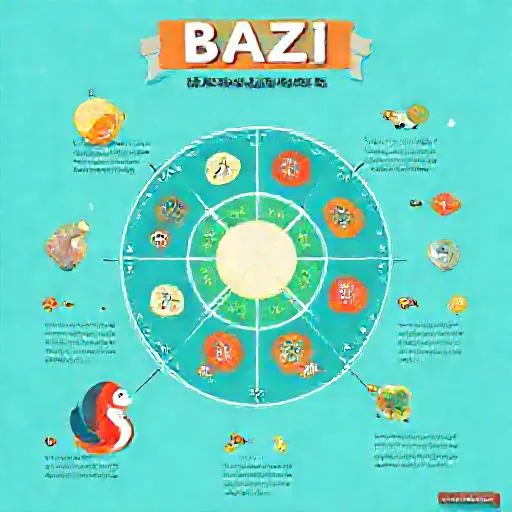
Bazi calculator guid
What Exactly Is Bazi, and Why Does It Matter?
If you've ever typed "bazi calculator guide" into a search bar and walked away more confused than when you started, you're definitely not alone. So let's break it down from scratch. Bazi, which translates to the "Four Pillars of Destiny," is a system of Chinese astrology that maps out a person's life potential using four simple data points: the year, month, day, and hour of birth. Each of those four time units becomes a pillar, and every pillar holds one Heavenly Stem and one Earthly Branch. That gives you eight characters total — "ba" means eight, and "zi" means characters. Pretty straightforward once you see it laid out.
The core idea behind it is actually kind of elegant: your exact birth moment captures a specific configuration of heavenly energy and earthly energy, and that snapshot shapes your temperament, your strengths and weaknesses, and the natural life cycles you move through. Now, before you assume this is all about fatalism, hear this out — most practitioners describe Bazi as a map of tendencies and timing rather than a fixed script. A good way to think about it? It's like a weather forecast for your life, not a predetermined fate. You still choose whether to carry an umbrella.
This is exactly where a bazi calculator comes in handy. Traditionally, a master would spend hours cross-referencing almanacs, solar terms, and complicated tables just to convert a Western birth date into the Chinese sexagenary cycle. These days, a solid bazi calculator guide can walk you through tools that do all that heavy lifting in seconds. But here's the catch — the interpretation still requires human judgment, which is precisely why understanding what the output means matters so much. A bazi calculator guide that skips the interpretation part is only telling you half the story.
How a Bazi Calculator Works Under the Hood: Solar Terms, Day Master, and Five Elements
Okay, this is where things get a little technical, but stick with me. A reliable bazi calculator does several things at once, and a thorough bazi calculator guide should explain each of them:
- Converts your birth date to the Chinese solar calendar. This isn't just about lunar versus solar — the traditional system uses 24 solar terms to define months, not the Gregorian calendar. Someone born on February 3rd and someone born on February 5th might land in completely different months.
- Determines your Day Master. This is the Heavenly Stem of your birth day, and it represents your core self. It's the single most important piece of the entire birth chart, and any decent bazi calculator guide will tell you to look here first.
- Maps the Five Elements — Wood, Fire, Earth, Metal, and Water — across all eight characters, showing which are abundant and which are missing.
- Calculates the Ten Gods, which describe how each element relates to your Day Master — think of them as relationship archetypes like the Resource, the Output, the Wealth, the Officer, and the Peer.
- Identifies your Luck Pillars, the ten-year cycles that shift the energy of your chart over time.
A quality tool will also flag interactions between branches — clashes, combinations, punishments, and harms — because these dramatically change how a chart plays out. If a calculator just spits out eight characters without any of that context, it's only doing half the job. This is a point every good bazi calculator guide hammers home.
The Solar Time Problem Most People Ignore in Their Birth Chart Calculator
Here's a detail that trips up even experienced enthusiasts: your birth time needs adjustment. True solar time differs from clock time based on your longitude and whether daylight saving was in effect. A birth chart calculator that ignores this can shift your hour pillar — and sometimes even your day pillar — into the wrong slot. Always check whether the tool you're using accounts for longitude correction and historical time zone quirks. It's a small detail with outsized consequences, and it's the kind of thing a trustworthy bazi calculator guide will flag right up front.
Reading Your Chart: A Step-by-Step Guide to Day Master Strength and Ten Gods
Alright, you've got your chart in front of you. Now what? Here's a practical sequence that experienced practitioners recommend, and a solid bazi calculator guide should walk you through these same steps.
Step 1: Find Your Day Master and Its Heavenly Stem Personality
Locate the Heavenly Stem in the day pillar. That character is you. Is it Yang Wood — imagine a towering tree — or Yin Metal, like a delicate ring? Each of the ten stems carries a distinct personality signature. Yang types tend to be direct and outward-facing; Yin types are often more receptive and nuanced. This isn't about gender — it's about energetic quality, and it's the foundation of any honest bazi calculator guide.
Step 2: Assess Element Balance Across Your Four Pillars
Count the Five Elements across your eight characters. Is Fire dominant? Is Water completely absent? A Chinese astrology calculator should present this visually, often with a bar chart or color-coded diagram. Remember: missing elements aren't automatically "bad." A chart without Metal isn't doomed — it simply means Metal-related themes like structure, precision, and boundaries may require conscious cultivation, or may arrive through your luck cycles.
Step 3: Identify Your Favorable Elements and Useful Gods
This is the heart of practical Bazi. Based on your Day Master strength and the overall chart dynamics, certain elements support you (your useful gods) and others drain or overwhelm you. Knowing your favorable elements lets you make smarter choices about careers, environments, colors, directions, and even the timing of major decisions. A good destiny chart calculator will at least hint at this, though nuanced analysis usually needs a skilled reader — something every bazi calculator guide should be honest about.
Step 4: Look at the Ten Gods Distribution for Psychological Insight
Which relationship archetypes dominate your chart? A heavy Wealth presence suggests someone oriented toward resources and results. A strong Output configuration points to creativity and expression. Heavy Officer energy often indicates discipline and authority — or pressure, depending on balance. This layer gives you remarkably specific psychological insight, and it's where a bazi calculator guide really earns its keep.
Step 5: Examine Luck Pillars and 2026 Annual Influences
Your natal chart is the blueprint; the luck pillars are the construction schedule. Each ten-year pillar interacts with your chart to activate or suppress different potentials. In 2026, many practitioners are paying close attention to how the current annual pillar interacts with individual charts — this is where a four pillars calculator becomes a planning tool rather than just a curiosity, and where a forward-looking bazi calculator guide adds real value.
Common Mistakes When Using a Bazi Calculator Guide
Let's be honest about the pitfalls. Plenty of people misuse these tools and walk away confused or misled — usually because they skipped the fine print in their bazi calculator guide.
- Garbage in, garbage out. Wrong birth time equals wrong chart. Double-check with family members if you're unsure. Even a two-hour discrepancy can change your hour pillar completely.
- Treating one reading as gospel. Different schools and different algorithms weight factors differently. Cross-reference two or three reputable tools before drawing conclusions.
- Ignoring the luck cycles. A chart that looks challenging at birth may bloom beautifully in a later decade. Static readings miss the whole point of timing.
- Over-indexing on missing elements. As mentioned, absence isn't catastrophe. Context is everything.
- Forgetting that Bazi is interpretive. No algorithm captures the full nuance of a skilled human reading. Use the calculator as a starting point, not the final word.
Bazi vs. Other Systems: Where the Four Pillars Calculator Fits
People often confuse Bazi with Western astrology or with the twelve-animal zodiac. They're related but distinct. Western astrology maps planetary positions against the ecliptic; Bazi maps time itself through the sexagenary cycle. The twelve-animal zodiac — the Rat, Ox, Tiger, and so on — is actually just the Earthly Branch of your year pillar, a single slice of a much richer system. Similarly, a numerology calculator or a Western birth chart tool answers different questions. Bazi excels at timing and elemental balance; numerology excels at core-number archetypes. Many enthusiasts use both, treating them as complementary lenses rather than competitors — and a well-rounded bazi calculator guide will usually say the same.
Practical Ways to Apply Your Bazi Insights in 2026
So you've analyzed your chart. What do you actually do with it? Here are some grounded applications that practitioners commonly recommend:
- Career alignment. Favorable elements often point toward industries and roles that suit your natural energy — for instance, a chart favoring Water might thrive in communication, flow-based, or advisory work.
- Timing major moves. Launching a business, changing jobs, or relocating during supportive luck pillars tends to feel smoother. It's not magic; it's strategic timing.
- Relationship awareness. Understanding your Ten Gods profile can illuminate why certain dynamics recur in your partnerships.
- Personal environment. Many people adjust colors, directions, and workspace layouts based on favorable elements — small levers that support a larger intention.
The key is moderation. Bazi works best as a reflective framework, not a superstition-driven rulebook. Use it to ask better questions about your patterns and timing, not to outsource your decisions to a chart.
Choosing the Right Bazi Calculator Guide for 2026
The market has exploded. Dozens of apps and web platforms now offer chart generation, many powered by increasingly sophisticated models. Here's what to look for in any bazi calculator guide:
- Accurate solar term calculation. This is non-negotiable. Ask whether the tool uses precise solar longitude rather than approximate calendar dates.
- True solar time adjustment. Longitude and daylight-saving corrections should be built in, not optional.
- Transparent methodology. Reputable tools explain which school or framework they follow. Vague promises of "AI destiny reading" without methodology are a red flag.
- Luck pillar and annual analysis. A tool that stops at the natal chart is incomplete.
- Interpretation support. Plain-language explanations of Ten Gods, element balance, and favorable elements make the output actually usable.
One more tip: be cautious with tools that promise definitive predictions about wealth, marriage, or health. Ethical practitioners frame Bazi as a map of tendencies, and the better platforms follow suit. A free bazi calculator can be a great entry point, but verify the methodology before you take its output seriously — and lean on a detailed bazi calculator guide to help you tell the good tools from the gimmicky ones.
Final Thoughts: A Map, Not a Cage — Why Bazi Still Matters
Bazi has survived for over a thousand years because it offers something genuinely useful: a structured way to think about your own nature and the rhythms of your life. A bazi calculator democratizes access to that framework, letting anyone generate a chart in seconds. But the real value comes from learning to read the map — understanding your Day Master, your element balance, your Ten Gods, and your timing cycles. A thoughtful bazi calculator guide is what turns raw characters into actual insight.
In 2026, with better tools and more accessible educational resources than ever, there's no reason to stay confused by a chart full of Chinese characters. Start with a reliable calculator, cross-check your results, and approach the whole thing with curiosity rather than fatalism. Your chart doesn't tell you who you must be — it shows you the terrain you're working with. And if you ever feel lost in the terminology, come back to this bazi calculator guide as your anchor. What you build on that terrain is still, ultimately, up to you.
So go ahead: pull up a calculator, enter your birth details carefully, and take your first real look at your Four Pillars. You might be surprised by how much the ancient map still has to say about your modern life.