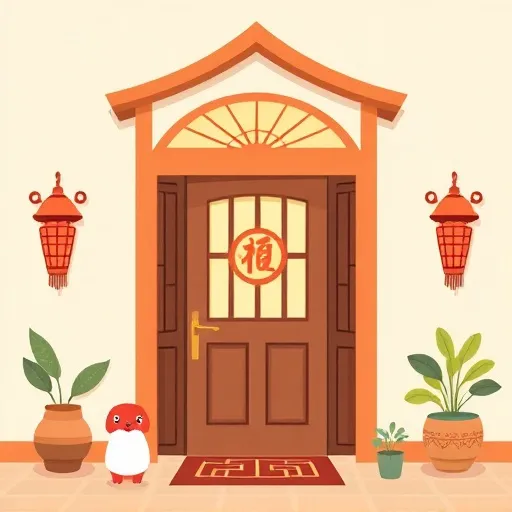
Feng shui home entra
Why the Home Entrance Matters So Much in Feng Shui: A Complete Guide to How to Set Up a Feng Shui Home Entrance
Let's kick things off with the big picture. In traditional feng shui, your home entrance is the main gateway where qi—that life force energy—flows into your living space. Picture it like the front door of a shop: if the entry is blocked, messy, or tough to find, customers (or in your case, opportunities) just don't walk in. The same logic applies to your place. Learning how to set up a feng shui home entrance starts with understanding that this spot is basically the mouth of your home—everything good comes through it.
Modern industry professionals who mix classical feng shui with environmental psychology point out that the entrance also shapes your everyday experience. It's the first thing you see when you get home and the last thing you see when you head out. A bright, tidy, welcoming entryway signals safety and calm to your nervous system. A dark, cluttered one does the exact opposite. So even if you're skeptical about energy flow, the practical benefits of nailing how to set up a feng shui home entrance are totally real.
One seasoned practitioner we talked to put it simply: "The entrance is where your home greets you. If that greeting is warm, everything downstream feels easier." That's the whole philosophy behind how to set up a feng shui home entrance in a nutshell.
Assessing Your Entrance's Current State Before You Learn How to Set Up a Feng Shui Home Entrance
Before you change a single thing, take stock. Stand outside your front door and look at it the way a guest would. Then walk in slowly and notice what you feel. This assessment is the foundation of any feng shui home entrance setup. You can't fix what you haven't noticed, and plenty of people live with blocked or awkward entrances for years without realizing how much it drags them down.
- Is the front door easy to find, or is it hidden behind shadows, plants, or clutter?
- Does the door open fully, or does it stick or hit something?
- Is the entryway well-lit, both outside and inside?
- What's the first thing your eye lands on when you walk in?
- Is there a place to pause, set down keys, and orient yourself?
Answering these honestly is step one of how to set up a feng shui home entrance that actually works.
Clearing the Path: The Most Important Move in How to Set Up a Feng Shui Home Entrance
If you only do one thing from this whole guide, make it this: clear the path to your door. In feng shui, a blocked entrance blocks opportunity. Practically speaking, that means no bikes piled against the door, no overflowing shoe racks spilling into the walkway, no dead plants, and no trash bins parked right next to the entrance.
Outside the door, trim back overgrown shrubs, fix broken light fixtures, and make sure the house number is visible and legible. If your door faces a long, dark hallway or a tight corner, consider adding a small light or a mirror to soften the approach. Inside the entryway, remove anything you don't use daily, give every item a designated home (keys, mail, shoes, bags), make sure the door can open a full 90 degrees without obstruction, and clear the floor entirely—energy should flow, not trip.
A wellness-focused designer we consulted noted that "the entryway is a threshold, and thresholds deserve respect. Even five minutes of decluttering changes how the whole house feels." That's a key insight for anyone figuring out how to set up a feng shui home entrance on a budget.
Working With Your Facing Direction When You Set Up a Feng Shui Home Entrance
Classical feng shui places a lot of emphasis on the facing direction your front door has—north, south, east, west, and the finer compass points in between. Each direction is tied to different elements and energies. Here's a simplified breakdown you can use as a starting point for how to set up a feng shui home entrance:
- North-facing entrances: associated with water and career energy. Cooler tones, reflective surfaces, and a sense of flow work well.
- South-facing entrances: associated with fire and recognition. Warm colors, good lighting, and lively plants suit this orientation.
- East-facing entrances: associated with wood and growth. Greenery, natural materials, and morning light are your friends.
- West-facing entrances: associated with metal and creativity. Clean lines, white or metallic accents, and uncluttered surfaces fit here.
You don't need to be rigid about this. The goal is harmony, not perfection. But paying attention to your entrance's orientation gives you a starting palette for colors, materials, and décor choices—super helpful when you're planning how to set up a feng shui home entrance from scratch.
Lighting Strategies for How to Set Up a Feng Shui Home Entrance
Light is one of the most underrated feng shui tools—and one of the easiest to fix. A dark entrance feels unwelcoming and, in feng shui terms, creates stagnant energy. Bright, warm light invites chi in. Use warm-white bulbs (around 2700–3000K) for a welcoming feel, add a layered approach with an overhead fixture, a table lamp, and maybe a small accent light, make sure exterior lighting works and is on a timer or motion sensor, and avoid harsh, flickering, or bare bulbs—they create visual noise.
If your entryway has no natural light (common in apartments and townhouses), a mirror placed thoughtfully can bounce light around and make the space feel larger. Just avoid placing a mirror directly opposite the front door—in feng shui, that's believed to push energy right back out. Nail this and you're well on your way with how to set up a feng shui home entrance that glows.
Choosing Welcoming Colors and Materials for Your Feng Shui Home Entrance
Color is a powerful lever in any feng shui home entrance setup. The general principle: choose colors that feel warm, grounded, and inviting—not aggressive or sterile. For a warm and grounding vibe, try terracotta, soft beige, and warm wood tones. For fresh and lively, go with sage green, soft olive, and natural linen. For calm and elegant, muted blues, warm grays, and soft whites do the trick. And for something energizing (use sparingly), deep red or burgundy as an accent works beautifully.
Materials matter too. Natural textures—wood, stone, woven fibers, ceramic—tend to feel more harmonious than heavy plastics or glossy synthetics. A wooden console table, a woven doormat, or a stone bowl for keys can all anchor the space. This is where how to set up a feng shui home entrance gets fun and personal.
Adding the Right Décor and Removing the Wrong Kind in Your Feng Shui Home Entrance
Now comes the fun part: making the entrance feel like yours. Feng shui doesn't ask you to strip your home of personality—it asks you to be intentional about what you bring in. Good additions include a healthy, rounded-leaf plant (like a jade plant or a rubber plant) for life energy; a mirror on a side wall to expand the space and bounce light (just not directly facing the door); a console table for keys and mail; artwork that makes you feel calm or happy; and a clean, well-placed doormat that signals "welcome" and keeps dirt outside.
Things to reconsider: clutter of any kind, broken or non-functioning items, dead plants or dried flowers, mirrors directly facing the front door, sharp or pointed objects aimed at the entrance, and excessive shoes piled by the door. According to a residential design specialist we interviewed, "the entrance should do two things: let energy in and let you exhale. Anything that works against those two goals is a candidate for removal." That's the heart of how to set up a feng shui home entrance without overthinking it.
Balancing the Five Elements in Your Feng Shui Home Entrance
Feng shui's five elements—wood, fire, earth, metal, and water—are a framework for balance. You don't need all five in equal measure, but a harmonious entrance usually has a mix. Think plants and wooden furniture (wood), warm lighting and red accents (fire), ceramics and stone (earth), metallic accents and round shapes (metal), and mirrors, glass, or a small fountain (water).
A simple example for how to set up a feng shui home entrance: a wooden console table (wood), a warm table lamp (fire), a ceramic key bowl (earth), a small metal-framed mirror (metal), and a glass vase (water). That's a balanced entrance in about five objects—easy and effective.
Keeping Your Feng Shui Home Entrance Maintained and Common Mistakes to Avoid
Here's the thing about feng shui home entrances: they're not a one-and-done project. An entrance that was perfect in January can be a disaster by March if shoes pile up and mail takes over the console table. Build a simple weekly habit: sweep or vacuum the entryway, clear the surfaces, wipe down the door, and check that the lightbulbs work. Five minutes a week keeps the energy moving and the space feeling intentional. If you live with multiple people, this is a shared responsibility—everyone's stuff ends up at the door, so everyone should help keep it clear. That ongoing care is the secret sauce to how to set up a feng shui home entrance that lasts.
Even well-meaning feng shui enthusiasts trip up on a few recurring issues. Over-decorating is a big one—more objects don't equal more harmony, so keep it simple. Blocking the door swing is another; if the door can't open fully, energy can't enter freely. Ignoring the outside matters too, since the approach to your door counts just as much as the inside. Mirror placement errors—like a mirror facing the door—are a classic feng shui no-no. And forgetting the function is a sneaky one: an entrance needs to work, with a place for keys, shoes, and mail. Beauty without function creates frustration, and that's the opposite of what how to set up a feng shui home entrance is supposed to deliver.
Setting up a feng shui home entrance doesn't require a big budget or a design degree. It requires attention, a willingness to declutter, and a bit of intentionality about light, color, and flow. Start with the clear path, add good lighting, and layer in elements that make you feel welcome in your own home. You'll notice the difference almost immediately—a well-set entrance changes how you arrive home, how you leave for the day, and how guests experience your space. In 2026, with so much of life feeling fast and fragmented, that small daily moment of harmony at the threshold is worth more than ever. Take it one step at a time, and your front door—and the energy behind it—will thank you. That's how to set up a feng shui home entrance the right way.