Five elements in Chi
The Five Elements at a Glance: Wood, Fire, Earth, Metal, and Water Explained
So, what are the five elements in Chinese philosophy? At the simplest level, they're Wood, Fire, Earth, Metal, and Water—just five categories. But here's the thing: that simplicity is deceiving. When people ask what are the five elements in Chinese philosophy, they're usually expecting something about literal substances. Instead, each one represents a phase of energy, a quality of movement, and a whole web of associations that spill into health, personality, seasons, colors, and way more.
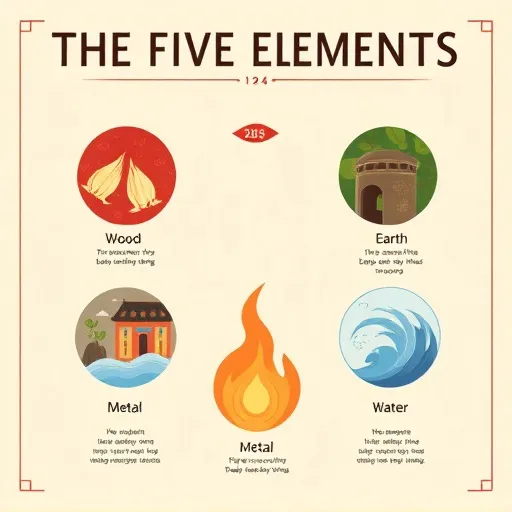
Here's the quick-and-dirty breakdown of what are the five elements in Chinese philosophy:
- Wood (Mu) – growth, expansion, creativity, and new beginnings
- Fire (Huo) – transformation, passion, visibility, and warmth
- Earth (Tu) – stability, nourishment, grounding, and transition
- Metal (Jin) – structure, refinement, clarity, and letting go
- Water (Shui) – flow, depth, wisdom, and rest
Notice these aren't literally about physical stuff. Wood isn't just trees—it's the principle of upward, outward growth. Water isn't just liquid—it's the quality of yielding, adapting, and going deep. This is the distinction that trips up almost every newcomer asking what are the five elements in Chinese philosophy, so keep it front and center as we go.
A Quick Origin Story of the Five Elements Framework in Chinese Cosmology
When you dig into what are the five elements in Chinese philosophy, you'll find the framework emerged from ancient Chinese cosmology, where early thinkers noticed that natural phenomena move in cycles. Instead of seeing the world as a pile of static objects, they saw a constantly shifting dance of energies. The five phases became a way to map that dance.
Over centuries, this idea wove itself into traditional Chinese medicine, feng shui, martial arts, astrology, and philosophy. A seasoned practitioner in traditional medicine might use the framework to diagnose imbalances, while a feng shui consultant might use it to harmonize a living space. As one industry professional recently put it, "The Five Elements aren't a belief system—they're a lens. You use them to notice patterns you'd otherwise miss." That lens has proven remarkably durable. In 2026, what are the five elements in Chinese philosophy is a question showing up in wellness apps, sustainable design discussions, and even corporate team-building workshops—often without people realizing where the concepts originated.
The Generating Cycle (Sheng) and Controlling Cycle (Ke) in Five Elements Theory
Here's where things get interesting. The five elements don't just sit there—they interact through two main cycles that explain how change happens. This is a core part of what are the five elements in Chinese philosophy, and it's what makes the framework actually useful.
The Generating Cycle (Sheng) is the "creation" or "nourishing" cycle. Each element supports and feeds the next: Wood feeds Fire (growth fuels passion and visibility), Fire creates Earth (combustion leaves ash, which enriches soil), Earth bears Metal (minerals form within the ground), Metal carries Water (condensation gathers on cool metal surfaces), and Water nourishes Wood (rain and moisture allow plants to grow). When this cycle flows smoothly, things feel balanced and productive—like a healthy supply chain where each stage supports the next.
The Controlling Cycle (Ke) is the "regulating" cycle, where each element keeps another in check: Wood controls Earth (roots break up soil), Earth controls Water (riverbanks contain the flow), Water controls Fire (water extinguishes flames), Fire controls Metal (heat melts metal), and Metal controls Wood (blades cut wood). This cycle prevents any single element from dominating—it's the built-in "checks and balances" of the system.
There's also an over-acting cycle (when control becomes excessive) and a counter-acting cycle (when an element pushes back). These are advanced topics, but just know the framework is flexible enough to describe both harmony and dysfunction—a key point when answering what are the five elements in Chinese philosophy in any real depth.
Wood as the Pioneer and Fire as the Communicator in Five Elements Personality
Wood energy is all about forward motion—springtime, sprouting seeds, ambitious plans. In people, Wood traits show up as decisiveness, vision, and a strong drive to grow. When Wood is balanced, you get leadership and creativity. When it's out of balance, you might see frustration, rigidity, or a tendency to bulldoze others.
Fire is the element of summer, heat, and connection. It governs visibility, enthusiasm, and social warmth. A Fire-dominant personality tends to be expressive, charismatic, and quick to laugh. Imbalance can show up as burnout, anxiety, or scattered energy—something a lot of people in fast-paced industries relate to. One wellness expert noted that "Fire management is really about knowing when to shine and when to dim the lights."
Earth as the Anchor, Metal as the Refiner, and Water as the Sage
Earth sits at the center of the cycle and represents transition—late summer, harvest, and the spaces between seasons. It's about stability, care, and digestion (both literal and metaphorical). Earth types are often reliable, nurturing, and grounded. When Earth is weak, people can feel unmoored or overwhelmed; when excessive, they may become overly cautious or stuck.
Metal corresponds to autumn, crispness, and the act of cutting away what's unnecessary. It's the element of structure, boundaries, and clarity. Metal-dominant people often value precision, efficiency, and quality. Imbalance can lead to perfectionism or emotional coldness. In the world of sustainable design, Metal's "less but better" principle has become something of a mantra.
Water rules winter, stillness, and depth. It's associated with wisdom, adaptability, and the unconscious mind. Water personalities tend to be perceptive, thoughtful, and able to flow around obstacles. When Water is depleted, you might see fear or exhaustion; when excessive, inertia or withdrawal. A senior practitioner once described Water as "the element that teaches you that softness is a strategy, not a weakness."
How the Five Elements Show Up in Health, Design, and Team Dynamics Today
You don't need to be a philosopher to use this framework. Traditional Chinese medicine uses the five elements to map the body's systems and identify imbalances—Wood links to the liver, Fire to the heart, Earth to the spleen, Metal to the lungs, and Water to the kidneys. Modern wellness practitioners often borrow these ideas to design seasonal routines, dietary plans, and stress-management strategies.
Feng shui consultants use the elements to balance a room's energy. Wood might show up as plants or wooden furniture, Fire as warm lighting or red accents, Earth as ceramics or natural stone, Metal as clean lines and metallic finishes, and Water as mirrors or glass. If you've ever walked into a space and felt instantly calm, there's a decent chance the elements were in harmony. Some organizations even use what are the five elements in Chinese philosophy to map team strengths—a project team with too much Wood (vision) and not enough Earth (execution) might struggle to ship, while too much Earth and not enough Fire can lead to slow decision-making.
Common Misconceptions About What Are the Five Elements in Chinese Philosophy
Before we wrap up, let's clear up a few myths that float around whenever someone asks what are the five elements in Chinese philosophy. First: "The five elements are literal substances." Not quite—they're better understood as phases or qualities of energy. Second: "You are one type and that's it." Actually, most people contain a mix of all five, with one or two being dominant at different life stages. Third: "It's fortune-telling." The framework is about pattern recognition and balance, not predicting the lottery—the elements describe tendencies, not certainties. And fourth: "It's ancient, so it's outdated." Ancient origins don't make a framework irrelevant; many contemporary designers and wellness professionals still find it useful precisely because it's flexible and non-dogmatic.
At its core, what are the five elements in Chinese philosophy is really a question about relationships: what's nourishing what? What's holding what in check? Where is there too much, and where is there not enough? In 2026, as we move deeper into a decade defined by complexity and a hunger for balance, these ancient cycles remain a living, breathing system of insight—one that rewards curiosity richly.