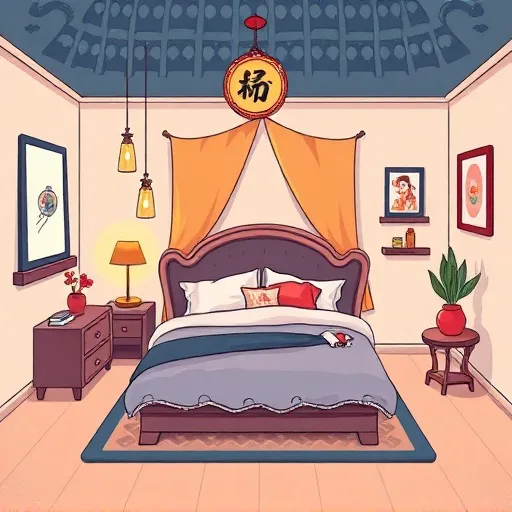
Feng shui bedroom sl
Why Feng Shui Still Matters for Sleep in 2026
Feng shui might be an ancient practice, but its core premise lines up shockingly well with what modern sleep science keeps telling us: your physical environment directly shapes your nervous system. A feng shui bedroom layout for better sleep isn't about incense and lucky charms — it's about arranging your space so your brain can finally stand down. When a room feels chaotic, exposed, or just plain awkward, your mind stays on low alert, even if you don't consciously register it. That background hum of vigilance is exactly what keeps you staring at the ceiling at 2 a.m. wondering why you can't switch off.
Environmental psychology researchers have known for years that rest quality hinges on how safe and settled a space feels. Feeling secure, having a clear line of sight to the door, and cutting down visual noise all lower cortisol levels at bedtime. Feng shui landed on remarkably similar conclusions centuries ago — just with different vocabulary. That overlap explains why so many interior designers and wellness-minded homeowners now blend spatial harmony principles with evidence-based sleep hygiene. A solid feng shui bedroom layout for better sleep is really just good design with a spiritual pedigree.
One industry professional we talked to put it bluntly: "The bedroom should feel like a retreat, not a storage unit with a mattress in it. When people actually fix their layout, they often report falling asleep faster within a week — before they've changed anything else." That's the power of getting your feng shui bedroom layout for better sleep right from the start.
The Commanding Position Anchor: Bed Placement Rules That Reduce Nighttime Anxiety
If you remember one thing from this whole guide, make it this: where your bed sits matters more than almost anything else. In feng shui, it's called the commanding position, and it's the anchor of any feng shui bedroom layout for better sleep. The idea is simple — your bed should let you see the door without craning your neck, sit diagonally rather than directly in line with the doorway, have a solid wall behind the headboard, and keep your head away from directly under a window.
From a modern standpoint, this is just nervous system common sense. Humans are wired to relax when they can monitor their surroundings. Sleeping with your back to an open door — or worse, with the door opening right onto your bed — triggers a subtle sense of vulnerability. Rearranging into the commanding position immediately dials down that background stress. It's the single highest-impact move in any feng shui bedroom layout for better sleep.
- Bed under a window: drafts, light leaks, and zero solid support behind you. Move the headboard to a solid wall.
- Bed facing a mirror: mirrors reflect and amplify energy, and plenty of people find them creepy at night. Cover or reposition them.
- Bed in line with the door: sometimes called the "coffin position." Shift it so the door is visible but diagonal.
- Floating bed in the middle of the room: feels unstable. Anchor it to a wall with a sturdy headboard.
A wellness consultant we interviewed noted that even tiny apartments can usually nail a commanding arrangement with some creativity — sometimes it just means rotating the bed 90 degrees or swapping two pieces of furniture. A clever feng shui bedroom layout for better sleep doesn't require square footage; it requires intention.
Five Elements Balance: Wood, Fire, Earth, Metal, and Water in Sleep Spaces
Traditional feng shui organizes everything into five elements — wood, fire, earth, metal, and water — and the goal is a balanced mix rather than an overload of any single one. You don't need a certification; just aim for variety and steer clear of extreme dominance. Wood (furniture, plants, natural fiber textiles) supports growth and calm but can feel busy in excess. Earth (ceramics, stone accents, beige and terracotta tones) is grounding and stabilizing — perfect for sleep spaces. Metal (frames, whites and grays, circular shapes) adds clarity, though all-metal rooms feel sterile. Water (deep blues, glass, flowing shapes) calms in moderation — but skip literal water features in a bedroom. Fire (reds, candles, bright lighting) stimulates, so use it sparingly.
The sweet spot for most bedrooms is earth and wood as the base with a touch of metal for crispness. This balance delivers the elemental harmony practitioners rave about — and it happens to create rooms that just feel good. Get this right and your feng shui bedroom layout for better sleep starts working on a subtle, atmospheric level.
Declutter Your Sleep Sanctuary: Minimalist Design Meets Stimulus Control
Every feng shui guide harps on clutter, and there's a reason it comes up constantly. Clutter is visual noise, and visual noise keeps your brain working overtime — meaning your mind never fully powers down. Treat your bedroom like a hotel suite, not a storage locker: no work laptops or paperwork on the nightstand, no dusty exercise equipment in the corner, no laundry pile on "the chair," and clear under-bed space since storage bins block energy flow and collect dust.
A senior designer we spoke with swears by a simple test: "Stand in the doorway and look at your bed. If anything in your line of sight creates a to-do list in your head, move it out." This is where feng shui and minimalist design overlap beautifully. A clean, intentional room cuts decision fatigue at night — and that alone can shorten how long it takes to fall asleep. Honestly, decluttering might be the cheapest upgrade to any feng shui bedroom layout for better sleep you'll ever make.
Lighting and Color Psychology: Warm Lamps, Blackout Curtains, and Calming Tones
Feng shui leans hard on lighting and color, and modern sleep science fully agrees. Your bedroom should shift into wind-down mode as evening approaches. Skip harsh overhead fixtures at night — they're stimulating. Layer warm, low lamps instead: bedside lamps, ambient floor lamps, dimmable bulbs. Keep the room dark for actual sleep with blackout curtains, especially in summer when the sun rises early. And yes, avoid screens in bed — the blue light and mental stimulation both work against you.
On color, feng shui theory favors calming, muted tones: soft blues, warm grays, sage greens, creamy whites, and blush. These support emotional equilibrium and make the room feel like a cocoon. That said, don't force a palette you dislike — the best bedroom color is one that soothes you. A dark, moody room can be incredibly restful if it feels cozy rather than gloomy. The principle is "calm and intentional," not a specific shade on a chart. Nail the lighting and color layers, and your feng shui bedroom layout for better sleep practically runs itself.
Air Quality and Energy Flow: Ventilation, Temperature, and Breathable Bedding
Feng shui talks about energy flow — air and vitality moving gently through a space, neither stagnating nor rushing. Turns out that maps neatly onto modern ventilation and air quality science. Crack a window daily for fresh air exchange, even in winter, since stale air hurts sleep quality. Keep air purifiers tucked neatly rather than blocking walkways. Avoid drafty bed positions — a bed in the direct path of a draft or AC vent disrupts sleep and counts as an energy-drain spot in feng shui. Choose breathable bedding like cotton and linen to support temperature regulation.
Temperature matters too. Most experts recommend a slightly cool bedroom around 65–68°F (18–20°C), and feng shui's emphasis on gentle, fresh energy aligns perfectly. A cool, well-ventilated room is a restful room — and that's a core pillar of any feng shui bedroom layout for better sleep worth its salt.
What to Keep Out: Work Items, Screens, and Heavy Emotional Associations
Feng shui has clear guidance on what doesn't belong in a sleep space, and it reads like a modern sleep hygiene checklist. Work items — laptops, files, work phones — keep your mind in "on" mode. Exercise equipment signals activity, not rest. Large mirrors facing the bed are unsettling at night. TVs and screens are a well-documented sleep disruptor. And items with heavy emotional associations — old photos, inherited stuff you feel obligated to keep — don't belong if they don't bring peace.
The logic is simple: your brain associates rooms with activities, and the more strongly your bedroom links to only rest and intimacy, the faster you'll fall asleep. Sleep medicine calls this stimulus control, and feng shui arrived at it independently. Every item you remove strengthens your feng shui bedroom layout for better sleep.
Couples and Small Spaces: Symmetry, Storage, and Creative Boundaries
Sharing a bedroom? Feng shui emphasizes symmetry — which happens to be great relationship advice. Matching nightstands on both sides, balanced lighting, and equal access to the bed create fairness and partnership. Add two sets of storage so neither partner's stuff spills over, avoid pushing the bed into a corner when two people share it, and clear out the physical residue of arguments. Seriously — recycle that pile of papers.
Studio dwellers, don't despair: feng shui scales down beautifully. Use a headboard to establish a "wall" behind the bed even without one, create a visual boundary with a rug or room divider, choose low-profile furniture, stick to the commanding position as best you can, and declutter ruthlessly since clutter gets magnified in small spaces. An experienced practitioner noted small bedrooms are often easier to make restful — fewer furniture decisions, less visual noise, and a natural sense of enclosure. A compact feng shui bedroom layout for better sleep can actually outperform a sprawling one.
Myths to Ignore and Your Weekend Refresh Checklist
Feng shui has collected plenty of rigid "rules" over the centuries, and not all deserve your time in 2026. No, you don't have to ban every plant from the bedroom — one or two well-chosen ones are fine. No, your bed doesn't need a precise compass direction; modern practitioners prioritize the commanding position and overall feel. No, you don't need to buy special feng shui products — the best changes are free. And no, feng shui isn't just for big homes; some of the best balanced bedroom design happens in small, simple rooms.
Ready to act? Here's a weekend checklist for your feng shui bedroom layout for better sleep: reposition the bed to the commanding position, remove or cover bed-facing mirrors, clear all clutter from nightstands and under-bed storage, swap overhead lights for warm layered lamps, add a natural fiber throw or wool rug, introduce one plant and one ceramic accent, move screens and work items out, set up symmetrical nightstands, wash bedding and open windows for a fresh-air reset, and hang blackout curtains if you're missing them. Most tasks take minutes, not hours — and the compound effect is real. Better spatial harmony reduces bedtime stress, lower stress improves sleep onset, and better sleep improves everything else. Keep a simple sleep log for two weeks before and after; you'll likely be surprised. In 2026, with all the noise competing for your attention, a calm bedroom isn't a luxury — it's a necessity, and a thoughtful feng shui bedroom layout for better sleep is the simplest path to get there.