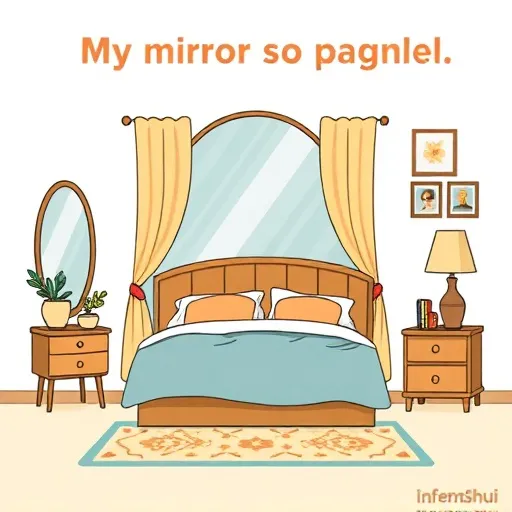
Mirrors as portals i
Why Mirrors Matter So Much in Feng Shui
Okay, let's kick things off with the basics, because understanding feng shui mirror rules for bedrooms starts with grasping what a mirror actually is in this tradition. In feng shui philosophy, a mirror isn't just a piece of glass hanging on your wall — it's a genuine portal. It doubles whatever it reflects back at you, and it keeps energy circulating around a room. That's fantastic in a dining area or entryway where you want to expand abundance and welcome opportunity. But in a bedroom, where the whole goal is stillness, that amplification can seriously work against you. This is exactly why feng shui mirror rules for bedrooms deserve your attention.
Think of your bedroom as a recharge station. Your body and mind need low-stimulation, grounded energy to wind down at night. A mirror bouncing light, movement, and visual information back at you all night long keeps your nervous system subtly alert. Many feng shui practitioners — and honestly, plenty of sleep specialists too — agree that this low-grade stimulation can interfere with deep sleep cycles. That's the practical side of feng shui mirror rules for bedrooms, and it's what makes them so worth following.
The Core Principle Behind All Feng Shui Mirror Rules for Bedrooms: Mirrors Activate Energy
Every object in feng shui carries either yin (calm, receptive, still) or yang (active, bright, moving) energy. Mirrors are strongly yang. Bedrooms thrive on yin energy. That's the entire tension in a nutshell. Your job is to balance the two so the room feels alive but not activated. Understanding this yin and yang dynamic is the foundation of all feng shui mirror rules for bedrooms.
The Golden Rule That Anchors Every Feng Shui Mirror Rules for Bedrooms Guide
If you remember only one rule from this entire article, make it this one: avoid mirrors that directly face the bed. This is the most universally cited guideline in feng shui bedroom practice, and for good reason. Among all feng shui mirror rules for bedrooms, this one tops the list every single time.
Here's what happens energetically, according to traditional feng shui theory: a mirror facing your bed reflects your sleeping form back into the room. It's said to create a sense of being watched or unsettled — some practitioners describe it as inviting a "third party" into the intimate space of the bed. On a practical level, catching your own reflection in dim light as you drift off or wake up can be genuinely startling. So when people ask about feng shui mirror rules for bedrooms, this is the answer they hear first.
What Actually Counts as "Facing the Bed" Under Feng Shui Mirror Rules for Bedrooms?
- A dresser mirror positioned directly opposite the foot of the bed
- A wall mirror mounted on the wall the bed faces
- Wardrobe doors with mirrored panels that open toward the bed
- Large decorative mirrors leaning against the opposite wall
- Even a TV screen (which behaves like a dark mirror when off) directly opposite the bed
If you can lie on your pillow and see your reflection, the mirror is facing your bed. That's the simple test. And it's the first thing to check when you start applying feng shui mirror rules for bedrooms in your own home.
Mirrors Above or Beside the Bed: Where Feng Shui Mirror Rules for Bedrooms Get Tricky
What about a mirror hung above the headboard? Traditional feng shui advises against this too. A mirror overhead is believed to create subtle pressure and anxiety — the subconscious mind registers a heavy object (and a reflective surface) hovering above. It's also just not great design psychology. This is one of those feng shui mirror rules for bedrooms that skeptics often overlook until they try it.
Mirrors on side walls parallel to the bed are generally more acceptable, especially if they don't reflect the sleepers directly. A mirror on a side wall that reflects a beautiful view, artwork, or soft light can actually enhance the room's energy without disturbing rest. So the feng shui mirror rules for bedrooms aren't a total ban — they're about smart placement.
A Quick Placement Cheat Sheet for Feng Shui Mirror Rules for Bedrooms
- Avoid: Directly opposite the bed, above the headboard, or angled so sleepers see themselves
- Acceptable: Side walls where the reflection doesn't catch the bed
- Ideal: Inside closet doors, on a dressing table that faces away from the bed, or in an adjoining dressing area
What If You Can't Move the Mirror? Practical Cures Within Feng Shui Mirror Rules for Bedrooms
Real life happens. Maybe you rent, maybe the mirror is built into the wardrobe, maybe the room layout leaves you no choice. Feng shui has practical remedies — called cures — for exactly this situation, and they're a lifesaver when rigid feng shui mirror rules for bedrooms feel impossible to follow.
1. Cover It at Night. A simple fabric drape, a folding screen, or a decorative curtain over the mirror is the classic solution. You get the mirror's daytime function without the nighttime reflection. Many people use a light linen or silk cover for a soft, elegant look.
2. Use a Folding Screen. A room divider or folding screen placed between the bed and the mirror blocks the reflection line entirely. Bonus: it adds texture and coziness to the space.
3. Reposition the Angle. Even a slight tilt can redirect the reflection away from the bed. A mirror angled toward a window or a piece of art shifts what it "sees" and softens its impact.
4. Frost or Film the Glass. Removable frosted film transforms a harsh reflective surface into a soft, diffused one. It still looks intentional and stylish, but it no longer behaves like a classic feng shui mirror. These four cures are the go-to fixes when feng shui mirror rules for bedrooms collide with real-world layouts.
Mirrors and Bedroom Doors: Another Key Piece of Feng Shui Mirror Rules for Bedrooms
Here's a rule that often gets overlooked: avoid placing a mirror directly opposite the bedroom door. In feng shui, the door is the mouth of qi — the main entry point for energy. A mirror facing the door is said to push energy back out, essentially reflecting opportunity and vitality away from the room. Some practitioners also note that a mirror opposite the door can create a disorienting effect at night, especially in a dark room. If you have a hallway mirror that reflects straight into your bedroom, consider repositioning it or adding a soft screen. This often-forgotten clause in feng shui mirror rules for bedrooms can make a real difference.
Mirror Shapes and Materials: The Subtle Details of Feng Shui Mirror Rules for Bedrooms
Feng shui is as much about the quality of objects as their placement. When choosing mirrors for your bedroom, keep these elements in mind:
- Round and oval mirrors are considered harmonious and gentle — excellent for bedrooms because circles symbolize unity and smooth energy flow.
- Rectangular mirrors are neutral and grounding, fine for most spaces.
- Angular or jagged shapes (think sharp-edged geometric designs) can create sha qi — harsh, cutting energy — and are best avoided near the bed.
A clean, clear reflection is ideal. Cracked, cloudy, or tarnished mirrors are considered poor feng shui anywhere in the home — they symbolize distorted energy and stagnation. If your bedroom mirror is chipped or foggy, replace it or remove it. Think of these details as the finishing touches on your feng shui mirror rules for bedrooms strategy.
The Psychology Behind Feng Shui Mirror Rules for Bedrooms (It's Not Just Mysticism)
Here's the thing — you don't have to believe in energy fields to benefit from these guidelines. Modern sleep science and environmental psychology back up much of what feng shui has taught for centuries, and that's why feng shui mirror rules for bedrooms keep proving useful even for total skeptics.
- Visual stimulation disrupts sleep: Reflective surfaces bounce light and movement, keeping your brain mildly alert.
- Reflections can trigger startle responses: Seeing movement in a mirror at night activates the brain's threat-detection system.
- Clutter and complexity raise stress: Mirrors visually multiply a room's contents, making a space feel busier than it is.
- Sense of security matters: A bed that feels protected and enclosed supports deeper rest — a core principle both feng shui and sleep experts share.
So even if you're a total skeptic, treating mirrors with intention in the bedroom is simply good design for better sleep. The feng shui mirror rules for bedrooms work whether or not you buy into the metaphysics.
Beyond Mirrors: Building a Feng Shui-Friendly Bedroom Around These Principles
Mirrors are a big piece of the puzzle, but they don't work alone. To create a bedroom that genuinely supports rest, pair your mirror strategy with these complementary practices that reinforce the same feng shui logic behind feng shui mirror rules for bedrooms.
Command Position for the Bed. Place the bed so you can see the door from it — but not directly in line with it. This "command position" supports a sense of safety and control, and it naturally reduces the likelihood of a mirror facing you.
Soft, Layered Lighting. Avoid harsh overhead lighting. Use warm, dimmable lamps and layered light sources to keep evening energy yin and calming.
Declutter Surfaces. Clutter is stagnant energy. Keep nightstands and dressers clear so the room feels open and breathable.
Balanced Materials. Incorporate natural textures — wood, linen, cotton, stone — to ground the space. Soft fabrics absorb excess energy and sound.
Common Mirror Mistakes to Avoid in 2026 When Applying Feng Shui Mirror Rules for Bedrooms
Trends come and go, but some mirror mistakes are timeless. Watch out for these as you refine your feng shui mirror rules for bedrooms approach:
- Mirrored furniture sets: A fully mirrored dresser or nightstand can create multiple reflection points. Admire the look, but reconsider it for the bedroom.
- Gallery walls with reflective frames: A cluster of small mirrors behaves like one big fragmented mirror. Keep them off walls that face the bed.
- Mirrors as "space expanders" in small bedrooms: Yes, mirrors make rooms feel bigger, but in tiny bedrooms they can over-activate the space. Use them strategically — inside a closet, for example.
- Smart mirrors with always-on displays: These combine reflection with glowing screens — double stimulation. Keep them out of the sleep zone.
A Zone-by-Zone Strategy for Feng Shui Mirror Rules for Bedrooms
Let's get practical. Here's how to think about mirrors in each zone of your bedroom:
The Sleeping Zone. No mirrors facing the bed. No mirrors above the headboard. This is the non-negotiable zone. Prioritize softness, quiet, and absence of reflection.
The Dressing Zone. If you have a dressing table or a corner for getting ready, mirrors here are welcome. Ideally, position the mirror so it faces away from the bed or use a tabletop mirror you can angle. A full-length mirror inside a closet door is one of the best solutions in feng shui bedroom design.
The Entry Zone. Avoid a mirror directly opposite the bedroom door. If you want one near the entrance for a final outfit check, place it on a perpendicular wall.
The Window Wall. Mirrors near windows can amplify natural light, which is lovely — but be careful about bouncing harsh daylight onto the bed. Sheer curtains help soften the effect.
Frequently Asked Questions About Feng Shui Mirror Rules for Bedrooms
Can I have a mirror in my bedroom at all? Absolutely. The feng shui mirror rules for bedrooms aren't a ban — they're a guide to placement. Mirrors in closets, on side walls, or in dressing areas are all fine. The key is avoiding direct reflection of the bed and the door.
What about a mirror on the ceiling? Traditional feng shui strongly advises against ceiling mirrors, especially above the bed. They're considered unsettling and over-stimulating. Most practitioners recommend removing them.
Does a TV count as a mirror? Yes, functionally. A dark, glossy screen reflects like a mirror when off. If your TV faces the bed, consider covering it at night or repositioning it.
What if my closet doors are mirrored and face the bed? This is one of the most common layout challenges when applying feng shui mirror rules for bedrooms. Use a folding screen, apply frosted film, or keep the closet doors closed with a curtain panel. Some people simply drape fabric over the doors at night.
Are round mirrors better than rectangular ones? In feng shui, round and oval shapes are generally favored in bedrooms for their soft, harmonious energy. Rectangular mirrors are neutral and acceptable. Avoid sharp, angular designs near the bed.
The Bottom Line on Feng Shui Mirror Rules for Bedrooms: Reflect Rest, Not Restlessness
Feng shui mirror rules for bedrooms really boil down to one elegant idea: your sleeping space should reflect calm, not activity. Mirrors are wonderful tools elsewhere in the home — they brighten, expand, and energize. But in the bedroom, their power needs gentle direction.
Take a walk through your room tonight. Lie on your bed. Look around. What do you see reflected back at you? If it's your own tired face or a busy corner of the room, it might be time for a small shift. Cover a mirror, angle a screen, move a dresser. These tiny adjustments can transform the way your bedroom feels — and how deeply you rest. In 2026, with sleep quality more precious than ever, a mindful mirror strategy built on solid feng shui mirror rules for bedrooms is one of the simplest, most affordable upgrades you can make. Your bedroom is your sanctuary. Make sure it reflects that — literally.